The Dining licence scheme is designed for our music used in restaurants, cafés, bistros – essentially any commercial enterprise preparing meals and hot drinks to be consumed onsite or off-site. This could be a counter-service fast food franchise, a full table service restaurant. Cafes, restaurants, and fine dining venues that play music are likely to need a licence.
If you play music protected by copyright in a public place such as a cafe, bistro, take away food outlet or restaurant (a commercial purpose) you need permission or you need to obtain a music licence. Legally this music use is different to playing music at home or in your car. This is called public performance of music.
Get licensed to play music legally in your business
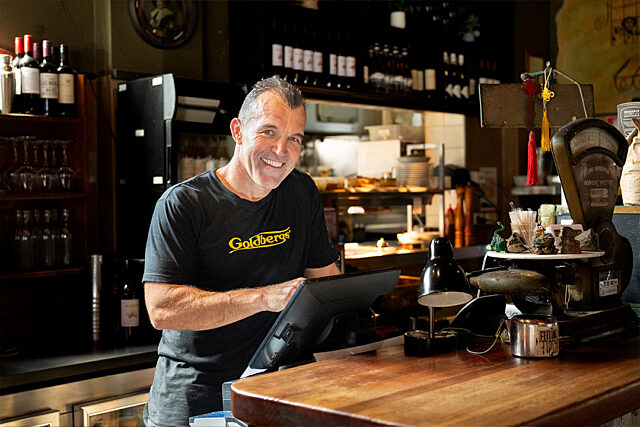
"Music is a very important aspect of our business. It sets the tone, and can make for a wonderful atmosphere, whether that be early morning for an upbeat piece of music, or late night to set the mood. The right music makes them regulars, not just visitors."
- Luke Davico, Goldbergs Coffee House Newcastle.
Music licence fees for dining depend on both the number of people you can seat, and the music source you use.
Licensees under this scheme range from small, single-location premises (for example, a family-owned table service restaurant) to large, multi-location operators (for example, a counter-service fast food franchise).
Learn more about how the licence fee for this scheme was set
If you are playing music in your cafe or restaurant, it is highly likely you need a 'public performance' music licence. Almost all popular music heard on TV, radio and streaming services is protected by copyright law. This applies to businesses who plays music, no matter the industry.
The media, entertainment, hospitality, retail, and fitness industries are just a few examples of sectors that rely heavily on music to create atmosphere, increase customer satisfaction, and positively influence customer experience.
However, not all businesses understand that the ‘public performance’ of music is also protected by copyright, which means that businesses need to get permission from the owner of the copyright in the music before they play that music in their business.
OneMusic is authorised to issue ‘public performance’ music licences on behalf of copyright owners for the vast majority of commercial music from around the world.
No - subscribing to a streaming service (paid or free) or even just turning on the radio doesn’t automatically give you the legal right to play that music in your business.
Firstly, the most popular streaming services that most of us use every day are only for our personal use (take a look at your music streaming service’s Terms of Use to see this in play).
More importantly, to play music that is protected by copyright ‘in public’ (that is, in your business), you need to get permission from the owners of that music copyright.
When your business has a OneMusic licence, you have the right to play the vast majority of popular and well-recognised music from around the world.
Copyright laws in Australia exist to protect the rights of copyright owners - to ensure their creative works are appropriately protected and valued. This is the same for music and music creators and thanks to the various industries that rely on music as an important part of their businesses, music licensing provides music creators with a steady stream of revenue so they can continue their creative work. These are referred to as royalties.
The money from music licence fees go to music creators. OneMusic keeps track of the music being played in a huge database drawn from radio and television stations, performance reports, streaming services, music recognition technology like Audoo and data from background music suppliers.
What happens if a business doesn’t pay for a music licence? Playing music that is protected by copyright in a business without permission may be an infringement of copyright, which may lead to legal action and significant costs.
A court proceeding can result in your business having to pay, not only the licence fees that would have applied, but additional costs such as ‘damages’ and legal fees.
OneMusic is a genuine music licensing organisation that has issued hundreds of thousands of ‘public performance’ music licences to businesses, individuals and organisations throughout Australia since 2019.
You can easily confirm OneMusic’s legitimacy by checking with various official websites, such as The Australian Business Licence and Information Service and the Australian Copyright Council.
Non personal/commercial use of music in a social media or YouTube video will require direct permission from the rights holders of the songs in question. These are separate to the rights provided via a OneMusic licence. Please see our guide on synchronisation rights.
Personal/non-commercial use of music in social media videos is covered under our agreements with the social media platforms. Please refer to the music-use policy of the social platform in question for more information.
The music rights organisations behind OneMusic have been licensing the use of music for almost 100 years. Launched in 2019, OneMusic is a joint initiative of APRA AMCOS and PPCA. In an effort to simplify the licensing process for customers, one licence was created to cover music use by songwriters, publishers, recording artists, record labels and composers
For our music used in dining spaces inside a hotel, pub, tavern, bar, casino, club, motel, resort, B&B, guest house, or fitness centre please refer to the relevant industry specific licence scheme. If your dining space is inside a retail shop or other multi-function establishment, please contact us.

 Restaurant and Catering Association
 Australian Restaurant and Cafe Association
 Gold Plate Awards
 Hospitality NT
 Small Business Association of Australia
 Tasmanian Hospitality Association
 Franchise Council of Australia
 The Coffee Commune
 The Tax Institute