
Retail
Why one playlist does not fit all: Music expectations, by industry
From fine dining to youth fashion, music expectations differ by sector.

23 November 2026
Music may be one of the most underrated tools to drive revenue in your retail or hospitality business.
Whether or not you’re paying attention to the background music in your business, your customers certainly are. It is one of the easiest levers you have available to influence how long people stay and how much they spend.
Psychologists and researchers have been studying the power of music to influence customer behaviours for some time now. InsideRetail and OneMusic’s 2025 survey confirmed that music is a powerful, and likely underrated force for increasing revenue for retail and hospitality businesses in Australia and New Zealand.
So if you are leaving it to chance, or whoever gets in first to select the music, you could be missing out on sales.
You might never have thought that much about why you play music. But there are many benefits for business. It can keep staff happier and energised. It’s often a kind of ‘pink noise’ to give customers a bit more privacy. It can reinforce brand identity or complement visual merchandising. It can affect how customers move through your premises and the products they choose.
So if you’re not giving your playlist much thought, you might be missing a powerful tool to affect mood and behaviour. Successful businesses know that the right music can encourage people to spend more, stay longer and choose to return.
“At Dean & Nancy, music is far more than background ambiance – it’s a vital part of the brand’s storytelling and emotional connection with guests.
From the moment someone steps into our venue, the curated soundscape sets the tone for moody soul and timeless classics. It complements the design, the cocktails, and the energy of the space, creating a multi-sensory experience that lingers long after the last drink is poured.”
Or the wrong music could drive them out and make them choose another business in future.
InsideRetail / OneMusic’s research found that around half of customers in both Australia and New Zealand reported staying longer because of the music. The effect was stronger for younger demographics, but it applied to all age groups.
You’ve spent a lot of time and effort getting customers into your premises. Increasing dwell time or keeping them there longer means they’re likely to browse and buy. Retail customers are more likely spot something else they need. Restaurant customers might stay for dessert or another drink.
The power of the playlist to increase spend has been observed in multiple studies around the world and now it’s confirmed by customers in Australia and New Zealand. Customers in Australia seemed to be particularly attuned to this effect, 46% of respondents in Australia and 40% in New Zealand said they had spent more when the music matched mood and surroundings. That’s a solid return on investment.
The increase in spend can be a flow-on effect of staying longer. It can also be to do with musical ‘fit’. When the music reinforces customers’ expectations of their experience, they feel welcome, relaxed, as if they’re in the right place. [add cross-reference to one playlist does not fit all]
There is also evidence that music can influence choice of products, for example steering customers towards particular wine or food choices, which might also help increase revenue from higher margin products.
The flip side is that if you get it wrong it can be jarring, customers can feel uncomfortable and may even leave. Around 40% of respondents said they had walked out because of the music and 17% of respondents said they had stopped visiting. Equally, around one in four shoppers downgrade their opinion of a business because of the music.
Sometimes music is just too loud. Often, it’s about a mismatch of expectations. So getting the genre right is essential. That means understanding your ideal customer and what they’re expecting.
It’s not necessarily about taking the safe options, either. Bland, ‘inoffensive’ tracks and repetitive playlists generally don’t support your branding, as the research confirmed. You risk your customers thinking your brand feels unprofessional, cheap or just disconnected.
The main thing to remember is to consider your customers’ experience first. Pay attention to the volume, cultural context, your customer demographics and what you are offering them.
Also think about all the other aspects of your branding and what kind of music best helps reinforce that.
That said, don’t be afraid to show a bit of personality. Your playlist can also be a great way of connecting with customers and sharing an experience with them.
“Our brand and our clients both benefit from music. It enhances the environment of our shop. It’s a great conversation starter, finding common ground with our clients and improving our rapport with them. It improves each visit and makes it more memorable, elevating the overall client experience.” – Joanna Roberts, The Mustachery
Perfecting your audio branding can be something of an art, so you can always get help from a professional if you’re unsure.
And of course, making sure you are using properly licensed music helps keep the experience great for you and your customers.
If you’re not sure how your playlist is stacking up, you can read the full research report.
Or take our two-minute quiz to get your Sound Score.
For more information or to find the right licence for your retail business, contact OneMusic today.
It really does seem to. Multiple studies around the world have reported on the ability of music to increase spend and customers in Australia and New Zealand report that they’re more likely to stay and spend when the music is right.
If it’s the right music it can make customers feel welcome, relaxed and enjoying their experience. Of course not all music has that effect. Some businesses use up-tempo music to speed up turnover and encourage customers to move through faster. If the music is too loud, too repetitive or too jarring it can also drive customers away, so it’s important to be clear about the effect you’re going for and select music accordingly.
Not necessarily. No music at all can make a space feel odd or flat and it will probably make most customers feel uncomfortable. Customers might think that the business is about to close and be reluctant to come in. Music can often act as a kind of ‘pink noise’ to soften the other noises including machines or conversations – so it can be more comfortable and give a greater sense of privacy.
That said, silence might be sometimes be helpful in small doses. Some businesses are starting to offer ‘quiet hours’ to assist customers with sensory processing issues by dimming lights and reducing sounds and other sensory inputs.
A OneMusic licence is fine-tuned to your actual music use - featured music, live music or background music - or a combination of all three. You can select a licence that suits your type of business or organisation.
You need to have permission from the copyright owners to play music in a public space. One way to do that is to get the appropriate licence for your business type and size.
You could also work with a background music supplier to design a playlist for your business. They may also be able to include a OneMusic licence as part of the package.
Share
Retail
From fine dining to youth fashion, music expectations differ by sector.
Hospitality
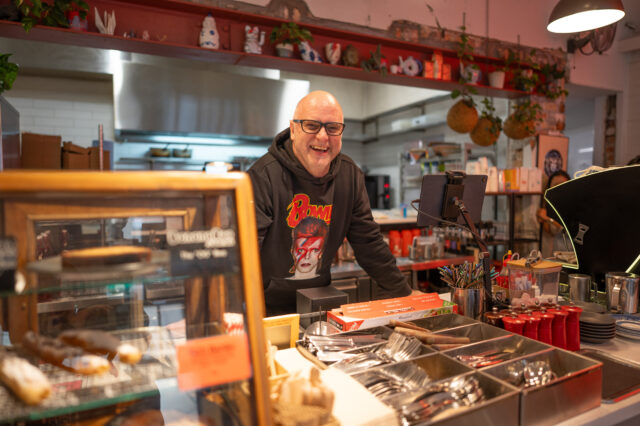
How Andrew Ray brought the unique Kafe Kooks to life through musical inspiration and maximum creativity.

Music
In turbulent and uncertain times, nostalgia can be a powerful force. Nostalgia is a longing for past times, experiences or connections. It evokes a time when (at least in our memories) things were simpler and possibilities were endless.