
9 April 2026
In turbulent and uncertain times, nostalgia can be a powerful force. Nostalgia is a longing for past times, experiences or connections. It evokes a time when (at least in our memories) things were simpler and possibilities were endless.
Nostalgia has long been a mainstay for marketers. Australian and international brands from clothing to technology, retailers to airlines lean into nostalgia for a campaign or entire strategy. Successful nostalgia marketing campaigns have many layers: quality products, eye-catching visuals, and a strong story. And the heart of almost every successful nostalgia marketing campaign is a great music soundtrack.
Music is known to trigger strong emotional responses. It can affect the human brain in positive ways. When we hear the music that takes us back, it can make us feel less anxious, more emotionally connected, even more willing to wait. All of which make it a great tool to market your business and engage with customers.
Nostalgia marketing refers to the way brands draw on feelings of nostalgia to create an emotional connection with customers. It shows up in fashion, design and retail cycles. ‘Everything old is new again’, usually every 20 years or so, as each generation comes of age with fond memories of their childhood.
Nostalgia for home has been the core of Qantas’ marketing for decades. Nostalgia has paid off for brands from Nike to Nintendo, Motorola to Volkswagen as they have mined their back-catalogues and developed new takes on much-loved product lines.
However, nostalgia may be an even stronger force in turbulent and uncertain times. Many of us seem to be feeling nostalgic for times before COVID-19, climate, political, technological and economic uncertainty dominated our awareness. And that’s true across generations. As Netflix’s ‘Stranger Things’ illustrates, nostalgia can be attractive even for audiences that have no actual memory of the ‘80s or ‘90s.
Nostalgia tends to improve our moods and reduce anxiety. It can make us feel more connected since it often attaches to shared experiences like a family gathering or a cultural moment. Brands that allow us to access these positive, pro-social emotions tend to benefit from this effect and can create stronger ties with their customers.
Nostalgia can increase our sense of emotional attachment to objects that remind us of our past. It tends to make us operate less rationally. There is some research that says it can make customers more willing to spend money. However, nostalgia marketing can also be tricky to get right. History is complicated and it is important to be aware of potential negative as well as positive connotations. If not done well nostalgia marketing can seem cynical or manipulative.
It cannot just be about rehashing the past. You need to find a connection with your business, perhaps an anniversary or customer feedback. Revisiting much-loved products could just seem lazy unless you add some reinterpretation or reinvention. But done well, nostalgia marketing can be great for business and can translate into strong social and word-of-mouth campaigns.
Music seems to evoke especially strong memories. Hearing a song can create a vivid picture that transports us back to a particular place or time in our lives.
Research suggests that most of us continue to have strongest associations with the music we hear between about age 10-22. As we begin to make our own choices, music and connecting with others who share our musical tastes can be a strong part of our identities. So hearing songs or music that we heard and loved from that period is particularly evocative.
We may also connect songs to specific events or people: a specific holiday, family celebration, a relationship. Which explains why retail and food and beverage brands often employ nostalgia campaigns to evoke cosy fireside Christmases, or the endless summers of childhood.
Nostalgia can be about a specific playlist. However, our associations with music may be as much cultural as personal. A swing, blues, or country and western track might be evocative as much for the time and place it evokes as for any personal associations.
When Bacardi celebrated its 150-year anniversary campaign in 2012 it chose to celebrate ‘150 years of legendary parties’ with a soundtrack including Parov Stelar’s Chambermaid Swing. That was a contemporary composition that powerfully evoked an era.
Clothing brands like Levi’s connect to nostalgia as a core value. Levi’s 501 campaigns have drawn on classics from Marvin Gaye (The Laundromat), Muddy Waters (The Fridge), Sam Cooke (The Bath). In each case the song and its lyrics tell a story. The songs also place us in a particular time even if we never experienced that time ourselves.
Recent research by Inside Retail for OneMusic found that customers in Australia and Aotearoa New Zealand were looking for comfort and a sense of calm when they enter a business premises. Leaning into nostalgic musical choices can be a shortcut to creating that sense of welcome and connection for your business.
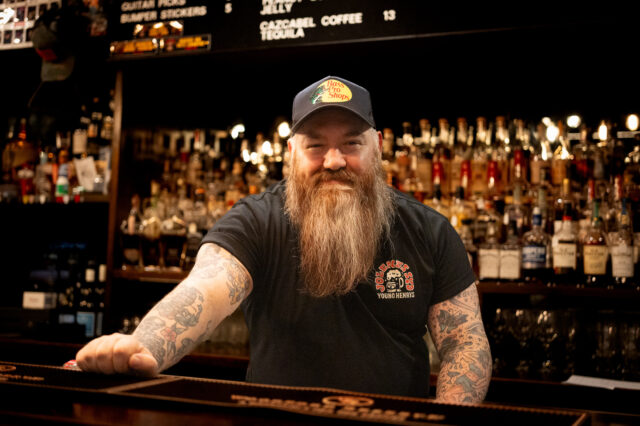
For Rosella’s Bar in Burleigh Heads, going hard on Oz Rock classics does just that. “It’s amazing when you see the old blokes from the surf club knocking back a couple of frothies with twenty-something hipsters. You know then that your bar is a place where anyone can pull up a chair and feel welcome as they dig into their spaghetti-bolognese jaffle or oysters in a foam Esky”, said Jack.
The key though is to create connection not cliché. Nostalgia marketing doesn’t mean all Australian businesses need to switch to Australian music or easy listening classics. Consider what resonates with your business and your customers. Local cafés might lean into a vintage folk / acoustic vibe. For a street clothing brand, nostalgia might mean 90’s hip hop.
Whatever you choose, the research suggests you will get a better response to licensed music. The InsideRetail/OneMusic research found that the under-45 demographics in particular were good at detecting generic stock tracks as opposed to ‘real music’ by artists they recognised. Stock tracks or AI-generated music were more likely to create an inauthentic or budget-sounding experience. Fans of the original are unlikely to be impressed if they think they’re hearing a knock-off.
Nostalgic instore music has offer another, perhaps unexpected benefit. It can make customers more patient and happier to wait.
Music generally is known to make customers willing to stay longer in a venue, which leads to longer browse times and greater likelihood of purchasing. Giving our brains something to do can also make waiting less irritating. But it should be music that we can connect with. Songs with lyrics have a more positive effect. Endlessly cycling or generic stock music can feel cheap and disrespectful, and risk irritating listeners.
And when music evokes a sense of nostalgia, it seems to make us much more willing to wait. Researchers believe that this links to the bittersweet nature of nostalgia. The memory is also tied up with the knowledge that time has gone and cannot be revisited. There’s often a sense of longing. We want to stay in that time and in that memory – to hang on to that moment or hear the song to the end.
In turbulent and uncertain periods, humans tend to long for a past that seems safer and simpler. Today a sense of nostalgia can help you build your community and get customers feeling good about their experience with your business. Your choice of music is essential. Include the songs that formed the soundtrack of customers’ lives and you can take them right to those moments and evoke that emotional connection.
Nostalgia marketing is a way brands can tap into customers feelings of nostalgia, through images, music and products that evoke an earlier time. Nostalgia is a strong driver of fashion and product cycles which tend to repeat every 20 years or so, as each generation comes of age.
Nostalgia can be the basis of a marketing campaign or an entire strategy. Brands can draw on nostalgia to revive past product lines. Some use nostalgia to attach feelings of safety, dependability or tradition to the brand and their products. Nostalgia marketing must be about more than rehashing the past, however. It requires reimagined product lines, strong visuals, a powerful story and a great soundtrack.
Nostalgia is known to improve our moods and reduce anxiety. It can make us more willing to spend time, and even money on objects or experiences that prolong that connection with our past.
In times of turbulence or uncertainty, nostalgia can be especially potent. Many of us now are looking back with nostalgia on times before COVID-19 and climate, political, technological and economic uncertainty dominated our awareness
Nostalgia can evoke shared experiences and cultural moments. It can make us feel more connected. It can make spaces feel calmer and more welcoming. Business that tap into these positive, pro-social emotions can create stronger ties with their customers.
Music is a powerful element of nostalgia marketing because it operates at an emotional level and can transport us in our imaginations to a particular place and time. We often associate certain songs with a time in our lives or with specific experiences. Music is often a strong part of our identities growing up, so hearing those songs again can be particularly evocative.
Nostalgia marketing can also be tricky to get right. There needs to be a reason to tap into nostalgia. Otherwise, it can feel like rehashing the past for no good reason, and can feel cynical, manipulative or just lazy. It’s not enough to revisit your company’s history or products, you also need to reinterpret or reinvent them.
The choice of soundtrack is essential, since the aim is to tap into an emotional connection. Our attachment is usually to a loved version of the song. While respectful reinterpretations can work, stock music or filler tracks are likely to feel poor quality and low effort.
Baktiari K. The power and perils of nostalgia marketing. (2025) Forbes. https://www.forbes.com/sites/kianbakhtiari/2025/08/31/the-power-and-perils-of-nostalgia-marketing/
Heshmat S. (2019). Music, emotion and well-being. Psychology Today. https://www.psychologytoday.com/us/blog/science-choice/201908/music-emotion-and-well-being
Heshmat S. (2024). The psychological benefits of nostalgic music. Psychology Today. https://www.psychologytoday.com/au/blog/science-of-choice/202402/the-psychological-benefits-of-nostalgic-music
Huang X. (2016). Feelings of nostalgia can make us more patient. Harvard Business Review. https://hbr.org/2016/11/feelings-of-nostalgia-can-make-us-more-patient and Huang X, Huang Z, and Wyer R. S. (2016). Slowing down in the good old days: the effect of nostalgia on consumer patience. Journal of Consumer Research, 43(3):ucw033 doi:10.1093/jcr/ucw033
Jekyll N, and Bilich C. (2025) Soundtracking Memory: The power of nostalgia in music and marketing. Advertising Week. https://advertisingweek.com/soundtracking-memory-the-power-of-nostalgia-in-music-marketing/
Lasaleta J. D, Sedikides C, Vohs K. D. (2014) Nostalgia weakens the desire for money. Journal of Consumer Research, 41(3): 713-729. https://doi.org/10.1086/677227
Schindler R. M, and Holbrook M. B. Nostalgia for early preferences as a determinant of consumer preferences. (2003). Psychology & Marketing, 20: 275-302. https://doi.org/10.1002/mar.10074
Share


Fitness