Find out the truth behind common music licensing myths in Australia. Learn how OneMusic works, what a music licence covers, and why your business may need one.
MYTH: Doesn't my Spotify subscription already cover music use in my business?
FACT: No - subscribing to a streaming service (paid or free) or even just turning on the radio doesn’t automatically give you the legal right to play that music in your business.
Firstly, the most popular streaming services that most of us use every day are only for our personal use (take a look at your music streaming service’s Terms of Use to see this in play).
More importantly, to play music that is protected by copyright ‘in public’ (that is, in your business), you need to get permission from the owners of that music copyright.
When your business hasa OneMusic licence, you have the right to play the vast majority of popular and well-recognised music from around the world.
MYTH: Is OneMusic a scam?
FACT: No - OneMusic is a genuine music licensing organisation that has issued hundreds of thousands of ‘public performance’ music licences to businesses, individuals and organisations throughout Australia since 2019.
MYTH: "Factories, offices and worksites don’t need permission or a licence to play music."
FACT: If a workplace plays music that is protected by copyright, permission from the copyright owners is required. This permission is typically obtained through a music licence.
Music is generally considered “in the workplace” when it is played for staff in areas such as offices, factories, worksites, staff lunchrooms or recreation areas, back docks, factory floors, or company gyms.
Many businesses assume music played for staff is private or domestic use, but this is generally not the case. Playing music for employees in a workplace – whatever the source of the music – is generally considered a public performance under copyright law and requires permission if the music is protected by copyright.
The Music in the Workplace licence is designed for businesses that make music audible to staff via speakers, radio, or music from computers and other devices. This may include music played in staff-only areas as well as at certain company events (such as office gatherings or end of year functions), and during company activities like training sessions, meetings and presentations.
MYTH: "Music creators don't get paid."
FACT: They do get paid- music creators, including songwriters, composers and recording artists rely on income generated from royalties to keep on creating songs and playing music.
All money generated from OneMusic licences goes back to music creators as ‘royalties’, minus administration costs.
APRA AMCOS member and music creator Emma Greenhill
MYTH:"I don't need a music licence if the music is royalty free"
FACT: Not always – it is sometimes the case thatmusic that is marketed as ‘royalty-free’ still needs permission or a licence before it can be played ‘in public’.
Even if the music is free to use, the song itself or the recording of that song might still be protected by copyright and playing that in your business without a licence can be a breach of copyright law.
Also, while you may think that ‘royalty-free’ is a cost saving, finding high quality licence-free music that fits your venue can take a lot of time, and your options will likely be limited.
MYTH: "OneMusic won’t know what music I’m playing in my business."
FACT: OneMusic uses a range of data sources to understand what music is being played across different types of businesses.
In some participating businesses, plug‑in music recognition devices such as Audoo Audio Meters are installed. These devices recognise music being played and ‘fingerprint’ song identification data (not audio recordings), which is reported to APRA AMCOS and PPCAand used alongside other information to help inform royalty distributions. APRA AMCOS and PPCA are the music rights organisations behind the OneMusic joint music licensing initiative.
For most businesses (outside of specific events), licence fees are not based on tracking every individual song played. Instead, fees are typically calculated using representative samples and factors such as business type (for example, café, retail or gym), venue size, whether music is live or recorded, audience or seating capacity and other measures.
To ensure the administration of music rights management remains cost-effective, organisations like APRA AMCOS often distribute royalties using reasonable approximation methods, rather than requiring exact tracking of every song in every location. This is consistent with global copyright practice.
To do this, APRA AMCOS uses information from a wide range of sources, including radio, TV broadcast, box office reports, digital streaming and download data, background music supplier reports, performance reports from live events and more. Together, this data helps ensure licence fees are distributed as fairly and accurately as possible to the rights holders whose music is being used.
MYTH: "I only play music from overseas, so those creators won’t be paid from any licence fees I pay in Australia."
FACT:OneMusic licenses the rights to play the vast majority of the world’s repertoireof commercially available music commonly used by businesses around Australia.
Licence fees are distributed to members and, through international agreements, to overseas rights organisations.
APRA AMCOS and PPCA — the music rights organisations behind the OneMusic joint licensing initiative — maintain reciprocal arrangements with similar organisations around the world. These agreements allow royalties collected in Australia to be passed on to international rights holders.
For example, if a business plays music by a French creator who is registered with SACEM, the French music rights organisation, the relevant royalties collected in Australia are paid to SACEM under these reciprocal arrangements. SACEM then distributes those royalties to its members, including the French music creator.
MYTH: "Musicians don't get any royalties from OneMusic licences"
FACT: ‘Royalties’ are what is paid to music creators when their copyright-protected music is used, particularly by other people. For instance, by radio stations, on TV or when played ‘in public’ by a business.
OneMusic keeps track of the music being played in a huge database that has been collected from music users across Australia, including from radio stations, TV broadcasts, music streaming services and live performances.
OneMusic then pays APRA AMCOS andPPCA the licence fees it collects so that they can pay ‘royalties’ to help music creators continue their work.
MYTH: "Nothing will happen if I don't get a OneMusic licence"
FACT: What happens if a business doesn’t pay for a music licence? Playing music that is protected by copyright in a business without permission may be an infringement of copyright, which may lead to legal action and significant costs.
A court proceeding can result in your business having to pay, not only the licence fees that would have applied, but additional costs such as ‘damages’ and legal fees.
FACT: Music licensing is what gives a business permission from the owners of the music (such as, the songwriter, orrecording artist) to play that music work ‘in public’, for instance in a store or at an event.
In general, business owners need to license the playing of most commercially available music in their bars, restaurants, cafes, retail stores and events (like food and wine festivals) because usually that music is protected by copyright and those businesses are playing it ‘in public’.
All industries from radio and digital streaming services to hospitality, retail and fitness benefit from music licensing, as it allows them to play the music they want any time without worrying about whether they are breaching copyright in that music. Find out more about licence types.
MYTH: "I don't need a music licence to play classical music"
Do I need a music licence if I’m playing classical music in my business?
FACT: If you’re planning on adding a touch of classical music to your retail store, restaurant, or place of business, it’s important to keep in mind that even really old music from people like Beethoven or Mozart is sometimes still protected by copyright and so may need a licence when played ‘in public’.
It is the case that the music of 18th century classical composers is no longer protected by copyright, but copyright can still apply for new recordings of those old compositions. Copyright would also still apply when old music from the classical period is reworked into a modern version, or when ‘classical’ music is created by a modern composer.
FACT: Under Australia’s copyright law, music that is protected by copyright can’t be played ‘in public’ without first getting permission from the copyright owner.
For a restaurant or cafe, playing music ‘in public’ includes playing music for customers, but also if playing it just for staff. In a gym, playing music ‘in public’ includes playing it to the gym’s members.
Generally, unless you are playing music for your own ‘personal and domestic’ use, such as at home or in the car, when a business plays music that is protected by copyright, it is playing that music ‘in public’ and therefore needs permission.
A ‘public performance licence’, such as is available from OneMusic, is a type of music licence that provides legal permission for business owners to play the vast majority of commercially available music ‘in public’, including for their customers, their members, their staff or ticket holders to their events.
MYTH: "I don't need OneMusic, they don't supply the music I play"
FACT: OneMusic is not a music supplier, it is a business that issues music licences on behalf of music creators from Australia and all around the world.
Music creators from around the world give music rights management organisations, like APRA AMCOS and PPCA, the rights they have in their music so that they can get paid ‘royalties’ from businesses that want to use that music.
To make music licensing even easier for business and to ensure they can play music without having to get permission from each individual music creator, APRA AMCOS and PPCA started OneMusic, which is a ‘one stop shop’ that gives businesses permission to play the vast majority of the world’s repertoire of music for a simple one off or annual fee.
MYTH: "The money only goes to top earning international artists like Taylor Swift."
FACT: Amounts of ‘money’ (royalty amounts paid to music creators) broadly reflect music use patterns.
Licence fees are distributed to a wide range of music creators and rights holders — not just top artists.Royalties are paid to songwriters, composers, publishers, recording artists and record labels. This includes Australian creators, independent artists and emerging musicians as well as global hit makers. Licence fees support a broad community of creators across Australia and around the world.
APRA AMCOS and PPCA, the music rights management organisations behind the OneMusic licensing initiative, represent local and global music creators. APRA AMCOS and PPCA distributes to a large rightsholder base in Australia and internationally.
While royalties are shared across the entire music ecosystem, more popular artists like Taylor Swift are likely to receive more simplybecause their music is being played more frequently and that music use data informs how royalties are paid to the holder of those rights.
MYTH: "I don’t need to pay for a licence because I’m giving the musician free promotion."
FACT: Playing copyright-protected music in a business is likely to be considered a public performance, and a licence or permission is required regardless of whether the use may also have promotional value for the music creators.
Playing music in your business enhances your customer experience, adds value to your environment, and that benefit is for your business, not just the music creator.
Under the copyright legislation, music creators have the right to authorise, and be paid for, the public performance of their music. This applies whether the music is played in the background or is a featured performance, or whether the performance is from a radio, a CD, a digital music streaming service or from a live musician.
MYTH: "I pay my live musicians, so I don’t need to pay for music licence."
FACT: Paying musicians does not remove the need for a music licence. Paying a performer covers their time and labour, but a licence is still required to publicly perform music that is protected by copyright, even if that performer is the creator of that music. That is, the licence covers the rights in the performance of the music itself.
When you pay a musician, you are paying them for their time and performance. However, the music being performed - the song, composition or recording - is owned by songwriters, composers, music publishers and record labels. In many cases, the artists you have paid to perform the music don’t own the rights and are not entitled to provide the permission for them to be performed.
Under copyright legislation, music creators have the right to authorise others to publicly perform their copyright-protected music. This means that a business must obtain permission for that use as paying a performer is not the same as paying the actual copyright owner. For the vast majority of the world’s repertoire of copyright-protected music, permission for public performance is provided in the form of a OneMusic licence.
What is a public performance licence? Who needs it and why
Public performance music licensing is where the owners of copyright in music grant permission for others to play their music in a public setting. In practice, music is publicly performed when played at retail stores, public events, like food and wine festivals, and in restaurants and bars, gyms, and dance schools.
Read more
Music
What's the fine for playing music without a licence?
A penalty from a copyright infringement is not called a 'fine'. They are called 'Damages', but they still reflect costs a Court says a business has to pay for infringing. Businesses are often unaware they may be infringing copyright when playing music in their premises and, if a business plays music protected by copyright without permission, it can end in legal proceedings with thousands of dollars in damages payable by that business.
Read more
Music
Is OneMusic legal or a scam? Everything you need to know
Discover whether OneMusic Australia is legal or a scam. Understand how OneMusic operates, its legitimacy, and what to look out for when dealing with music licensing in Australia.
Read more
Music
Where does the money from a OneMusic licence go?
Most businesses obtain a OneMusic licence so that they’re able to legally play the copyright-protected music that their customers love. The big question is, where does the money from the licence fees go, and how does it benefit the people who create the music?
Read more
Media
Why businesses in Australia may need a licence if they play music
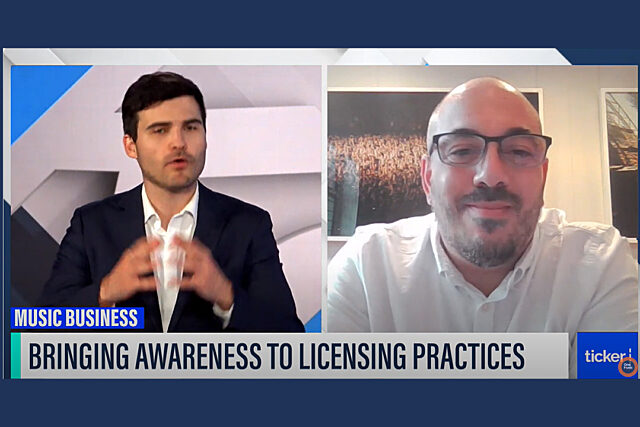
Director of Business Operations at OneMusic, Phil Akouri speaks to Mike Loder of Ticker News on why Australian business owners need to know about music licensing.
Read more
Is OneMusic the only place for a public performance music licence?
If you want to be able to choose from the largest possible collection of commercially available music to play in your business, then a OneMusic licence provides the easiest and most flexible way to legally ‘publicly perform’ the vast majority of the world’s repertoire of music.
Read more
Music
What Is Royalty Free Music and How Does It Work?
Learn what royalty free music really means, how it works, and how to check if a track is safe to use for business or content.