

9 October 2025
This article covers the not-so-obvious questions a fitness business may wonder about music licensing.
The OneMusic Fitness Centre and Fitness & Wellbeing Instructors licence does not cover the rights necessary to live stream or deliver video-on-demand fitness classes online.
APRA AMCOS has a separate licence available to businesses that provide live stream or video-on-demand services to their online customers. Find out more about APRA AMCOS’ Online mini-licence.
APRA AMCOS does not issue licences that give creators the right to place music into videos. This permission must be obtained from the owners of that particular copyright –(known as a ‘synch’ or ‘synchronisation’ right). For the songs, that right is usually held by the songwriters themselves or by music publishers. For the synch right in the musical recordings, it is usually held by record companies.
If a video creator has obtained the synch right, then the actual playing of those videos on social media platforms, such as such as YouTube, Facebook, TikTok, Instagram etc, is covered by the licences that those platforms have, for instance, with APRA AMCOS.
Where the creator has not obtained the synch right in the music used in a commercial video (including a video made for publicity or promotion) may have that material taken down (a takedown notice), blocked or de-monetized by the social media platform.
OneMusic's Fitness Centre and Fitness & Wellbeing Instructors licence covers the public performance of music in fitness classes whether they are held inside or outside, in a traditional gym or in a park, on the beach, or in a hall, community centre or car parks.
Whether the local council allows classes to occur on their property depends on the rules of each council. You should check with your local council.
We find the most common mistake is businesses leaving OneMusic licensing on the “To Do” list and not setting up the right music licensing cover for their fitness business.
Putting off getting a music licence could lead to an increase in the costs to your business as copyright infringement can lead to a court awarding significant ‘damages’ to copyright owners for unlicensed use of their music.
Another common, but easily fixed, mistake is forgetting to update OneMusic when the circumstances of the business changes (such as an increase or decrease in member numbers, class numbers or a change to how a gym or studio is using music). We ask licence holders to let us know if any of their music use details change so OneMusic can adjust their licence.
If a business has questions about music licensing for their gym or fitness studio, our advice is to contact OneMusic directly or seek advice from an industry body such as AUSactive.
As soon as a new gym or fitness studio decides to switch on the tunes, they will need to think about their public performance music licensing.
If the music they want to play is commercial music from around the world, then it is very likely they will need to obtain a OneMusic Fitness Centre and Fitness & Wellbeing Instructors licence.
Studios can choose the level of OneMusic cover they require for different types of music use as relevant to their specific business – whether they just need general background music, music for classes, music videos or add-ons like telephone-on-hold music.
It’s easy to obtain a licence online or OneMusic is available to discuss the details and guide businesses through the process by contacting OneMusic.
OneMusic has been set up to ensure that businesses across Australia are able to get the benefits of using the vast majority of the world’s repertoire of music in one simple licence. Enforcement of copyright owners’ rights for the unlicensed use of music is always a last resort.
That said, APRA and PPCA (being the music rights organisations behind OneMusic) have an obligation to ensure their music creators are paid when their songs are played in a commercial setting (including in a gym or fitness class) and APRA and PPCA have taken legal action against fitness centres in the past.
In one example, APRA was left with little choice but to commence legal action for copyright infringement against a fitness centre in the ACT. In that case, the Federal Court ordered that the operators must pay over $10,000 in unpaid licence fees, as well as $5,000 in additional damages and legal costs. In awarding these damages, the Court considered the fact that the operators of the fitness centre continued to play music without a licence despite being clearly aware that it constituted copyright infringement.
In another example, PPCA commenced proceedings against a fitness centre in South Australia, and the Court ordered the company, and its director, to pay over $2,500 in unpaid licence fees, $8,200 in legal costs and $50,000 in additional damages.
Plenty of Australian artists have benefited from their songs being played in licensed gyms around Australia. We know hip hop, electronic dance music, remixes, pop and even alt-country offer the high beats per minute (BPM) that fitness consumers crave.
Home-grown hero Dom Dolla’s ‘Saving Up’ is at number 3 behind two US artists in the top 50 songs played by gyms in Australia. *
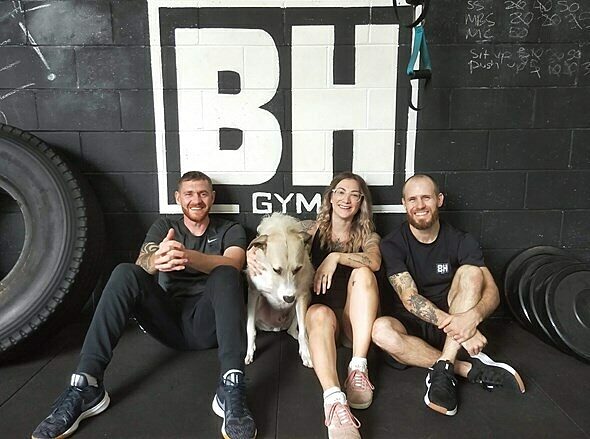
Thousands of gyms across the country are not only doing the right thing by carrying a licence, but putting local tunes at the forefront. Brickhouse Gym in Coorparoo plays 25% Australian music year on year.
But how does OneMusic know that? Hundreds of businesses have an Audoo Audio Meter installed in their venue. It’s free of charge, and OneMusic arranges the install.
This Audio Meter is a small plug-in device that ‘fingerprints’ the music being played. That song data is securely sent to APRA AMCOS and PPCA, the member organisations behind OneMusic so they can better work out which music creators to pay based on real-life playlists around the country. Find out more on how it works.
*Figure from Audoo reporting between 01/01/2025-01/08/2025.
Share


Fitness